

NBA Finals Showcase Huge Progress of Women in Sports Photography
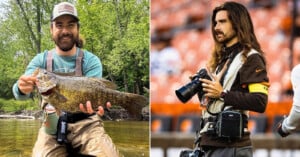
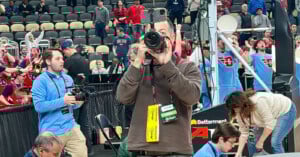
Photographer Sam (Samantha) Owens is covering her first NBA Finals, representing the long-time advancement of women assigned to document elite sports events.
Glass Imaging's impressive GlassAI Neural image signal processing (ISP) technology is heavily featured in the brand-new Honor 600 smartphone, promising to improve the zoom photography experience on the fancy new phone.
When it comes to Android phones, Samsung is among the first to come up in conversation. The company built part of that cachet on the camera performance of its flagship Galaxy S series, but has long since abdicated the role of setting the pace for mobile camera hardware.
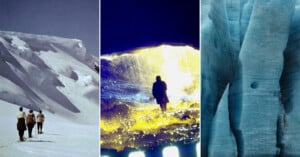
National Geographic's new documentary film, "Time and Water," grapples with a challenging, profound question: How do you say goodbye to what you never thought you could lose? Through archival footage, photos, art, and science, Academy Award-nominated director Sara Dosa follows acclaimed Icelandic writer and poet Andri Snær Magnason as he confronts the death of his country's glaciers, the loss of his grandparents, and the kind of world he hopes future generations can experience. The story's next chapters are being written at this very second.
Photographing and writing an in-depth project enhanced the published product, says an award-winning independent photojournalist.
This week on the PetaPixel Podcast, we sat down with Yuji Igarashi, General Manager of Professional Imaging Products in Fujifilm's Imaging Solutions Division. Echoing Fujifilm's successful Focus on Glass event in early March, we mostly chatted about glass, including where Igarashi thinks Fujifilm succeeds, and where it can go from here.
Canon Explorer of Light and famed car and car culture photographer Larry Chen is a major character in the brand-new racing video game, Forza Horizon 6.
Leica Camera AG has opened a new flagship store and gallery in Chicago, marking a milestone moment that aligns with two major anniversaries: 50 years of Leica Galleries and 20 years of Leica retail. The launch reflects the company’s continued shift toward experiential spaces that combine photography, culture, and community.
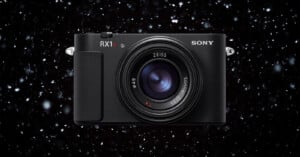
Last July, Sony surprised the photography world by unveiling the RX1R III, arriving so many years after the RX1R II that many RX1R fans had all but given up hope of a new model ever coming. Sony even released two more A-mount DSLRs after the RX1R II, to put the wait into perspective. So what took so long? Sony told PetaPixel that it needed to develop the right technology to make a new RX1R camera worth it, and that tech took time.
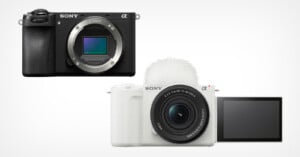
Sony's full-frame Alpha cameras rightly get a lot of attention, especially among enthusiast and professional photographers and hybrid creators. However, the company tells PetaPixel it remains very committed to APS-C, and that demand for APS-C products has steadily increased over the years.
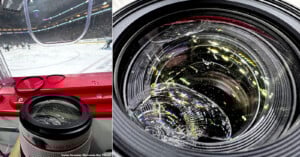
The infamous camera cut-out at hockey arenas has claimed another victim, this time The Minnesota Star Tribune photographer Carlos Gonzalez's brand-new Canon RF 70-200mm f/2.8L IS USM.
Professional architectural photographer Mike Kelley has achieved extensive commercial success but has remained dedicated to personal artistic projects as well. These personal projects have often been the ones to lead to Kelley's "craziest opportunities," including one that took him to NASA's Michoud Assembly Facility to photograph the Orion crew capsule and SLS rocket that just last week carried four brave Artemis II astronauts into space to orbit the Moon.
If there is a villain in The Stringer documentary, then it is not so much Nick Ut, the AP photographer who has long been credited with taking the famous Napalm Girl photograph, but Horst Faas, the Chief of Photos in Saigon who allegedly swapped the credit on Napalm Girl.
Photographer Steven Madow has been photographing rocket launches for over a decade, but arguably no rocket launch he has photographed has been as big of a deal as the Artemis II launch on Wednesday, April 1. Madow set up 14 different Panasonic Lumix cameras to cover the monumental event, including seven remote cameras at the launch site. His outstanding photos are the result of years of practice and planning.
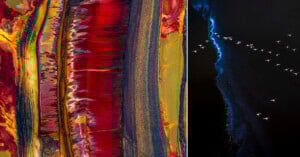
Photographer Jon McCormack's new monograph, "Patterns: Art of the Natural World," is a beautiful visual love letter to nature and all its intricate patterns, from microscopic and rarely-seen to vast and majestic.
As its name suggests, National Geographic's new two-part documentary series, "Secrets of the Bees," turns the lens toward one of Earth's most important inhabitants: bees. The series is fascinating, full of interesting information and science about bees, but also replete with exceptional cinematography. The miniseries has many fantastic close-up shots of bees, unlike anything captured before.
Sports journalist David Jablonski is a multimedia pioneer. For nearly two decades, he has achieved a journalism trifecta: writing, photography, and videography.
Tamron is focused on making lenses that no other manufacturer does. A consequence of this is that Tamron makes a lot of zoom lenses, although the company reiterated to PetaPixel at CP+ 2026 that it is not opposed to making new prime lenses, but it needs to be the right prime, a unique offering.
Nikon's original Nikkor Z 24-70mm f/2.8 S and Nikkor Z 70-200mm f/2.8 VR S lenses were already superb when they were released in 2019 and 2020, delivering great optical performance and dependable autofocus inside a well-designed chassis. However, much has changed in lens design in the years since, and Nikon's even better, significantly lighter 24-70mm f/2.8 S II and 70-200mm f/2.8 VR S II zooms reflect multifaceted technological advancements.
When Ricoh announced the GR IV Monochrome, many fans of the format first cheered because it was a long time coming, then cried in dismay at the cost. Many voiced opinions that it was a "cash grab," but Ricoh explains that matching optics to the specialized sensor was just very costly.
Photographers would be forgiven for thinking that Panasonic is no longer committed or interested in developing new Micro Four Thirds products, but as the company told PetaPixel at CP+ 2026 in Japan, it is still very much interested in developing new MFT products that capitalize on the format's core strengths.
Photographers often feel like certain camera technology has plateaued. Sure, sensors get a little better, autofocus improves with each generation, and cameras are faster than ever. However, camera tech rarely improves by leaps and bounds like it once did. Canon believes AI may fuel many of the biggest camera tech breakthroughs in the coming years.
For the last couple of years, PetaPixel has asked OM System executives about the company's plan for the beloved Pen series. Previously, the response has been tepid, so it didn't ask again this year. Surprisingly, OM System executives brought it up instead.
Panasonic Lumix makes fantastic hybrid cameras that perform well in a variety of situations. However, many argue that most aren't particularly good-looking cameras.
For over a decade, Panasonic Lumix has been at the forefront of video production in an affordable and compact package. But in speaking to PetaPixel at CP+ earlier this year, the company also expresses a desire to be recognized for photography -- just not for high-end sports.
Leica Camera AG announced a significant expansion of its flagship Leica Oskar Barnack Award (LOBA) this year, introducing the LOBA Women Grant, a new initiative to fund and elevate the work of female photographers worldwide. It is part of the company's broader focus on amplifying important voices in photography.
When Canon unveiled its first mirrorless full-frame camera, the EOS R, in 2018, the company touted its new EOS RF lens mount. While it has the same 54-millimeter diameter as the DSLR EF mount, the RF mount's flange distance is significantly shorter, shrinking from 44 millimeters to just 20. Canon promised that this would enable bold new lens designs, and the company's latest lenses show that as well as any of Canon's 60-plus RF lenses.
The compact camera market is white-hot right now. Compact camera sales more than doubled in Japan in 2025, and many of the best-selling cameras last year at Map Camera, a major Japanese photo retailer, were compact models. Canon is no stranger to compact camera success and is committed to giving people what they want.
Looking at Fujifilm's releases in 2025, the company did a little bit of everything, and released some very surprising, strange cameras. It is easy to think that Fujifilm is just a company keen to experiment and take risks, but the company tells PetaPixel that hard research data drives its product decisions. That said, fun matters, too.
Fujifilm's X Series cameras do a lot right. They are extremely capable, performant APS-C mirrorless cameras with many passionate supporters. However, for as good as they are, autofocus performance remains an oft-discussed shortcoming, especially for video applications. Fujifilm says it hears the complaints and is working hard to address the feedback.
When National Geographic Magazine set out to tell the story of bioengineered “supersilk,” it created a photogenic test to prove its strength.
The first photo of a ghost elephant captured by a motion controlled camera. The eyes glow in this night shot.
Many exceptional photographers captured jaw-dropping photos of world-class athletes performing incredible feats at the Milan-Cortina 2026 Winter Olympics in Italy. In most cases, these photographers used the expected equipment, the latest full-frame mirrorless cameras and telephoto lenses. However, a select group of Getty Images photographers took a very different approach, and documented the Winter Olympics with thermal, infrared, and vintage film cameras, and using unique processing techniques.
Earlier this month, the Seattle Seahawks bested the New England Patriots in Super Bowl LX at Levi's Stadium in Santa Clara, California. It is one of the biggest sporting events in the world, and the Seahawks' team photographer, Rod Mar, was there to capture all the action, and ultimately, the Seahawks' elation.
Vaonis' new $99,000 Hyperia smart telescope with Canon optics is high-end astronomy gear with an astronomical price to match. Although designed primarily for educational institutions and museums, wealthy stargazers in the U.S. and the Middle East have already placed orders to get Hyperia's first deliveries in 2027.
From intimate family stories to documentary and vérité filmmaking that captures life in motion, Myles Matsuno has spent decades turning everyday moments into unforgettable narratives. The photographer discusses the influences that shape his creative vision, the flow states that bring an image to life, and the deeply personal projects that preserve memory and history for generations.
NASA's Curiosity Mars rover used its onboard LEDs, typically used for illuminating shaded areas during daytime operations, to capture a very rare nighttime shot of the Martian surface.
Alongside being an aerospace engineering student, Tyler Staub and his brother, Calvin, also started a drone service company to capture aerial media for local businesses. Now you can add "inventor" to Tyler's list of accomplishments, as he has built a new adapter, the aptly named Dronebal, to turn a DJI Mini 4 Pro drone into an easy-to-use, high-quality handheld camera.
Photojournalist John Abernathy was tackled by ICE agents in Minneapolis last week and his last-ditch effort to save his camera was successful thanks to fellow photographer Pierre Lavie, who captured Abernathy's camera-saving toss in a now-viral image. Lavie's powerful portrait reflects the importance of photojournalism, captures the risks photographers face in the field, and, to the benefit of Leica, shows how rugged the company's cameras are.
As small-town newspapers fade, photojournalist Richard Sitler has an idea to fill the void in his midwestern hometown.
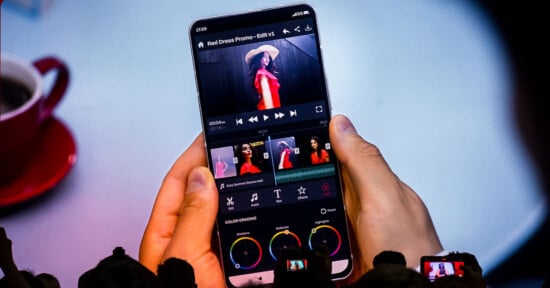
When Apple announced Creator Studio, it made sure to almost immediately highlight its selling points: low cost of entry, easy to use, wide breadth of capabilities, and cohesion among apps. Combine that with the education discount, and it's clear Apple is targeting up-and-coming artists.
In National Geographics new series, "Pole to Pole With Will Smith," viewers follow Smith and world-renowned experts on an adventure across the globe, starting at the South Pole and concluding in the season finale at the North Pole with stops in the Amazon, the Pacific, Himalayas, and Kalahari Desert along the way. PetaPixel chatted with Tom Williams, executive producer of "Pole to Pole," about the series and how it was filmed.
After 25 years behind the camera, OM SYSTEM photographer Jerred Zegelis thought he knew the rules of photography. Shoot RAW. Stay neutral. Fix it in post. Art Filters are for amateurs. These weren't suggestions. For Zegelis, they were law, absorbed from forums, tutorials, and years of professional habit.
Then he invented a fictional town, shot an entire trip using a filter he once dismissed as cheesy, and intentionally started to break the rules. The Nebraska native calls the results the best work of his career.
The Kodak Charmera keychain camera has been a smash hit. Sold in blind boxes, the 1.6-megapixel retro-styled toy camera was one of the biggest photo gifts of the holidays. However, straight out of the box, its capabilities are arguably a bit lacking, thanks in large part to its tiny built-in lens. That's where expert camera modifier James Warner, or Snappiness as he's known online, comes in. What would happen if you gave the Kodak Charmera a better, bigger lens?
In National Geographic's latest documentary, "Cheetahs Up Close," Emmy Award-winning wildlife photographer and cinematographer Bertie Gregory travels to the Serengeti to capture jaw-dropping close-up footage of cheetahs as they rest, hunt, and of course, run. Gregory and fellow Emmy Award-winning wildlife cinematographer Tom Walker use long lenses, drones, and specialized equipment to capture remarkable shots, ensuring "Cheetahs Up Close" is as beautiful as it is exciting.
Mt. Olivet, Kentucky -- named after the biblical Mount of Olives -- is a hamlet in the smallest county in Kentucky. Population estimates vary, from 155 in 2023 to a bit higher number in the 2020 census. Photojournalist Michael Swensen, based in tiny Mt. Olivet, gets big-time assignments. His work has been seen worldwide via The Associated Press, Getty Images, The Washington Post, and more.
Artist and photographer Alexander Newman Hall went viral recently for a laser photo he created for a multimedia project. However, the internet success came at a great cost, as Hall broke his camera.
At the end of each year, TIME selects its Top 100 photos of the year. As always, the 2025 edition is replete with superb photography, ranging from split-second action shots of important news events to powerful photos from longer-term projects, the collection is a compelling visual reminder of the major events of 2025 and, perhaps as importantly, photography's power in telling the world's most important stories.
Amidst whiplash change in technology and media, Grand Ole Opry is celebrating its 100th year (1925-2025).
The Carnegie Corporation named 26 Andrew Carnegie Fellows in 2025, providing scholarships up to $200,000. One of these 26 Fellows is a photographer/cinematographer: Pulitzer Prize winner Steven G. Smith, a professor at the University of Connecticut.