Public Art Lands Photog in Hot Water
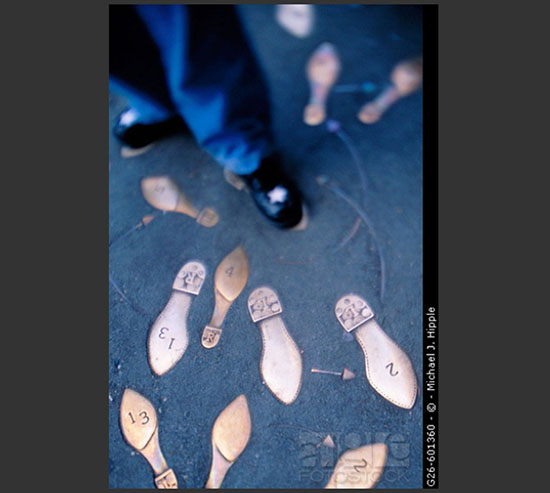
 

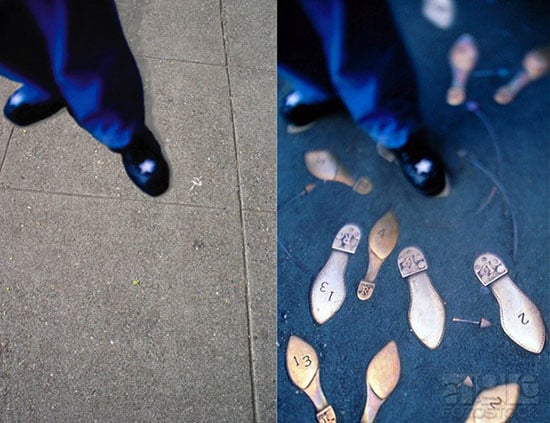
In February 2008, Seattle-based photographer Mike Hipple received a letter from the lawyers of sculptor Jack Mackie that one of his stock photographs infringed upon Mackie’s copyright. Shown above, the photograph includes a portion of Mackie’s “Dance Steps on Broadway”, a public art piece created in 1979 with public funds.

Though the stock agency complied immediately with Mackie’s demands by removing the image and providing a settlement, Mackie is now suing Hipple for “copyright infringement and claiming the full measure of statutory damages, possibly $60,000 or more.” On the blog Hipple set up to collect defense fund donations, he states,

Now if this doesn’t qualify as fair use of the sculpture, I don’t know what does. “Fair Use” is a legal concept that allows a certain amount of copying of someone else’s work—you can get a fuller idea of how it works at the Stanford Fair Use Project website.

Think of it this way: if Mr. Mackie is correct and this isn’t fair use, then he can file a $60,000 law suit against anyone who, when strolling along Capitol Hill, thinks the dance steps are nice and takes a photo or video. He may not find you if you just leave the image on your camera or computer, but as soon as you post it to Facebook, Flickr, YouTube, etc., he can (and apparently will) sue you.

What do you think? Is this a case of copyright infringement or fair use?

(via A Photo Editor)


Image credit: Photo by Mike Hipple. Screenshot from Motion to Dismiss on Photo Attorney


View Comments

  1. [...] case, from Seattle, where photographer Mike Hipple is being sued by sculptor Jack Mackie over the photo Hipple took about 10 years ago of a woman standing near the “Dance Steps on Broadway” [...]

  2. stbernard says:

    This isn't about lawyers, it's about Mackie, he sues people who use his art for gain. See “Jack Mackie, Plaintiff-appellant, v. Bonnie Rieser; Seattle Symphony Orchestra”. “There are packs of low-talent, desperate lawyers out there willing to write up a lawsuit on contingency at the chance someone will cut a check.” maybe it's Mackie and not the lawyers…..

  3. stbernard says:

    See “Jack Mackie, Plaintiff-appellant, v. Bonnie Rieser; Seattle Symphony Orchestra”

  4. stbernard says:

    see “Jack Mackie, Plaintiff-appellant, v. Bonnie Rieser; Seattle Symphony Orchestra”

  5. Mike Caprio says:

    If it was Jack Mackie v. Viacom or Jack Mackie v. Disney it would actually fit my definition of “giant corporation with oodles of legal resources.”

  6. [...] Public Art Lands Photog in Hot Water (the photo in question) [...]

  7. bick mylum says:

    If i take a wide city landscape shot of london and I want to sell it, do I now need to contact the owners of every building, the architect, the brick suppliers, the glass manufacturers the window cleaners, the cable companies, the man who invented the satellite dish on every roof top…etc…etc…etc….? Do I just photoshop out the ones who wont give permission?

    What about every stock library shot with an apple laptop in it? or an iphone? do they need paying because I used their product in my shot?

    Obviously the artist needed a bit of publicity and some cash as he struggles through the recession….seems like he doesn't get out much either and needs to get a life…

    On the other hand….for those who are buying! I just created a photograph that has me holding a photograph of this image in question and I'm selling it….screw the artist and the photographer right? HAHAHA! no seriously…drop me a line if you want it!

  8. Slenderthread says:

    Artists are entitled to copyrights in their creations, which include reproductions (even in different media) and derivative works. Even if the derivative is original enough for copyright protection itself, it still can (and very likely will) infringe the original copyright owner's rights (in, say, reproduction and derivative works). I am a copyright lawyer, and I am really shocked at the misinformation that so many people have about copyright.

  9. Slenderthread says:

    Fair use considers whether the use is commercial or noncommercial. You can take a photograph of the sculpture for your personal use. If you make money from selling photographs of other people's art, that's a whole different story. It's not fair *art*, it's fair *use*, and you have to consider how people are using the copyrighted work.

  10. VivaUSA says:

    Hi Slenderthread… Question for you, If a statue is defaced with additional clothing and other elements and pictures of it are sold will the copyrights still be enforced? Aren't you making a parody of the original statue? Thoughts?

Leave a Reply

blog comments powered by Disqus